One of the first questions I hear from business owners is: “Do I need a website, or is a landing page enough?” The answer depends less on budget and more on the goal. Let’s untangle it.
What is a landing page?
A landing page is one page with one goal. It’s usually built for a paid campaign – on Facebook, Instagram or Google – and its job is to turn whoever clicked the ad into a lead: leave their details, call or send a WhatsApp message.
What makes a good landing page:
- One sharp message that matches the ad that brought the visitor.
- No menu and no distractions – there’s nowhere to “escape” except the action you want.
- Proof – reviews, results, client logos.
- A clear call to action repeated several times down the page.
- Fast loading – in a paid campaign, every second of waiting costs money.
What is a business website?
A business website is your digital home. It has several pages – home, about, services, projects, blog, FAQ and contact – and it answers the question “why choose you?” in depth.
The big advantages of a website:
- Trust: clients check you out before they reach out. A professional website is the first proof that you’re serious.
- Organic traffic: service pages, articles and FAQs bring traffic from Google – without paying for every click.
- Visibility in AI engines: when people ask ChatGPT or Gemini “who does X near me”, a site with well-organised content and structured data is more likely to be mentioned.
- A long-term asset: unlike a campaign that stops when the budget runs out, a good website keeps working for you.
The comparison in short
| Feature | Landing page | Business website |
|---|---|---|
| Pages | One | Several to dozens |
| Main goal | Campaign conversion | Trust, information, organic traffic |
| Traffic source | Mostly paid | Organic, paid, referrals and AI |
| Typical build time | One to two weeks | Three to six weeks |
| Investment | Relatively low | Higher, pays off over time |
So which one is right for you?
Choose a landing page if:
- You’re launching a specific product, workshop or offer.
- You’re about to run a paid campaign and want the best return on it.
- You’re just starting out and want to test demand before a bigger investment.
Choose a website if:
- Your clients “do research” before buying – they compare, read reviews and check experience.
- You have several services or audiences.
- You want to appear on Google and in AI answers without paying per lead.
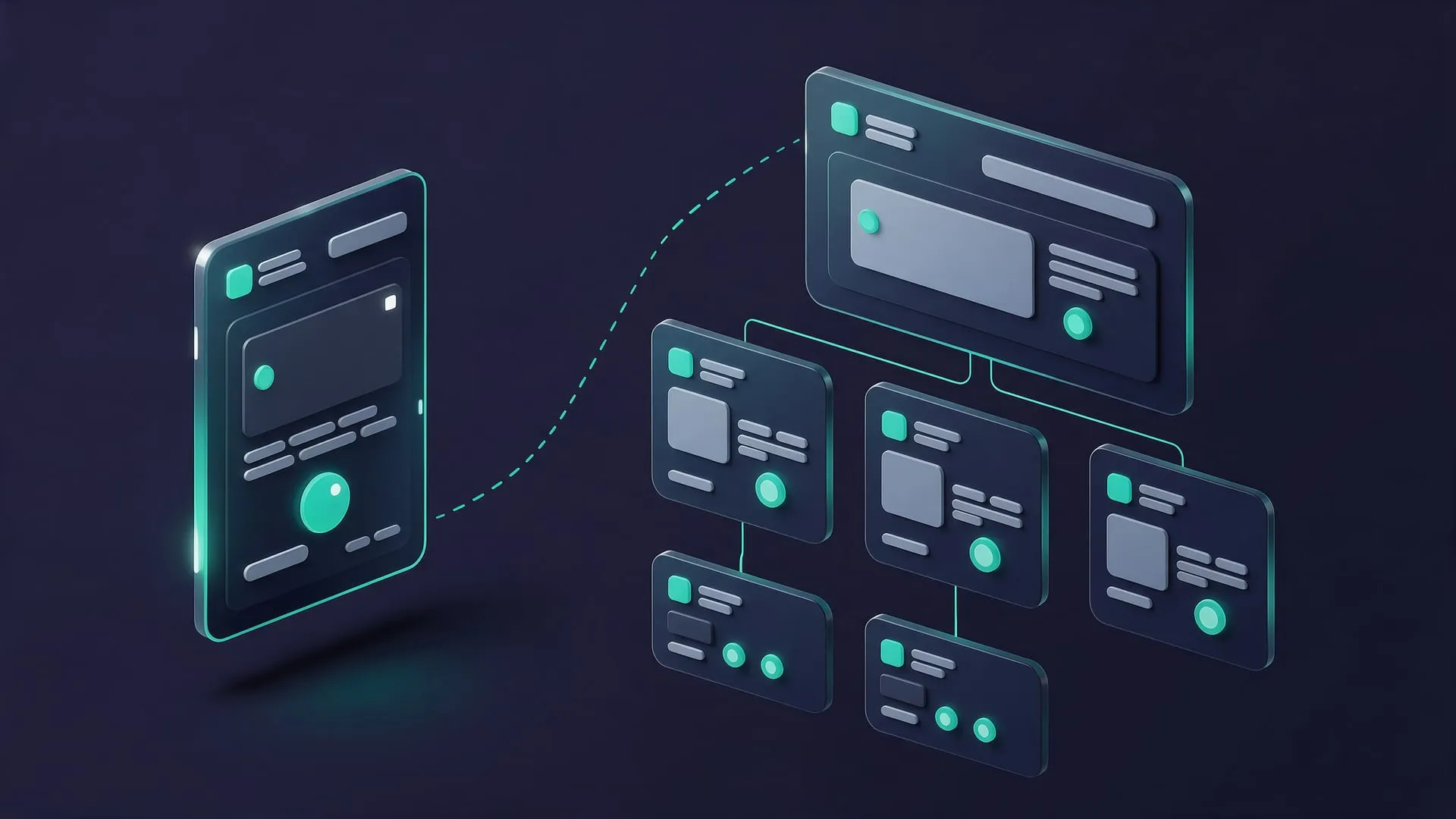
And the third option: start with a focused landing page, then grow into a full site. When the foundations – branding, messaging and design – are built right from the start, expanding is natural and doesn’t mean starting from scratch.
Three mistakes to avoid
- Building a website and sending a campaign to the home page – visitors get a general page instead of an answer to the ad, and leave. Campaigns always deserve a dedicated page.
- A landing page without proof – without reviews or examples, even a great message won’t convince.
- Forgetting mobile – most visitors arrive on their phones. A page that wasn’t designed for small screens first loses leads.
The bottom line
There’s no single right answer – there’s the right answer for your business. A short discovery call is enough to understand the goal, the audience and the budget, and to choose the option that pays for itself fastest.
Want to check what fits you? Get in touch or see projects I’ve built.